
Trademark | 2026-10-26
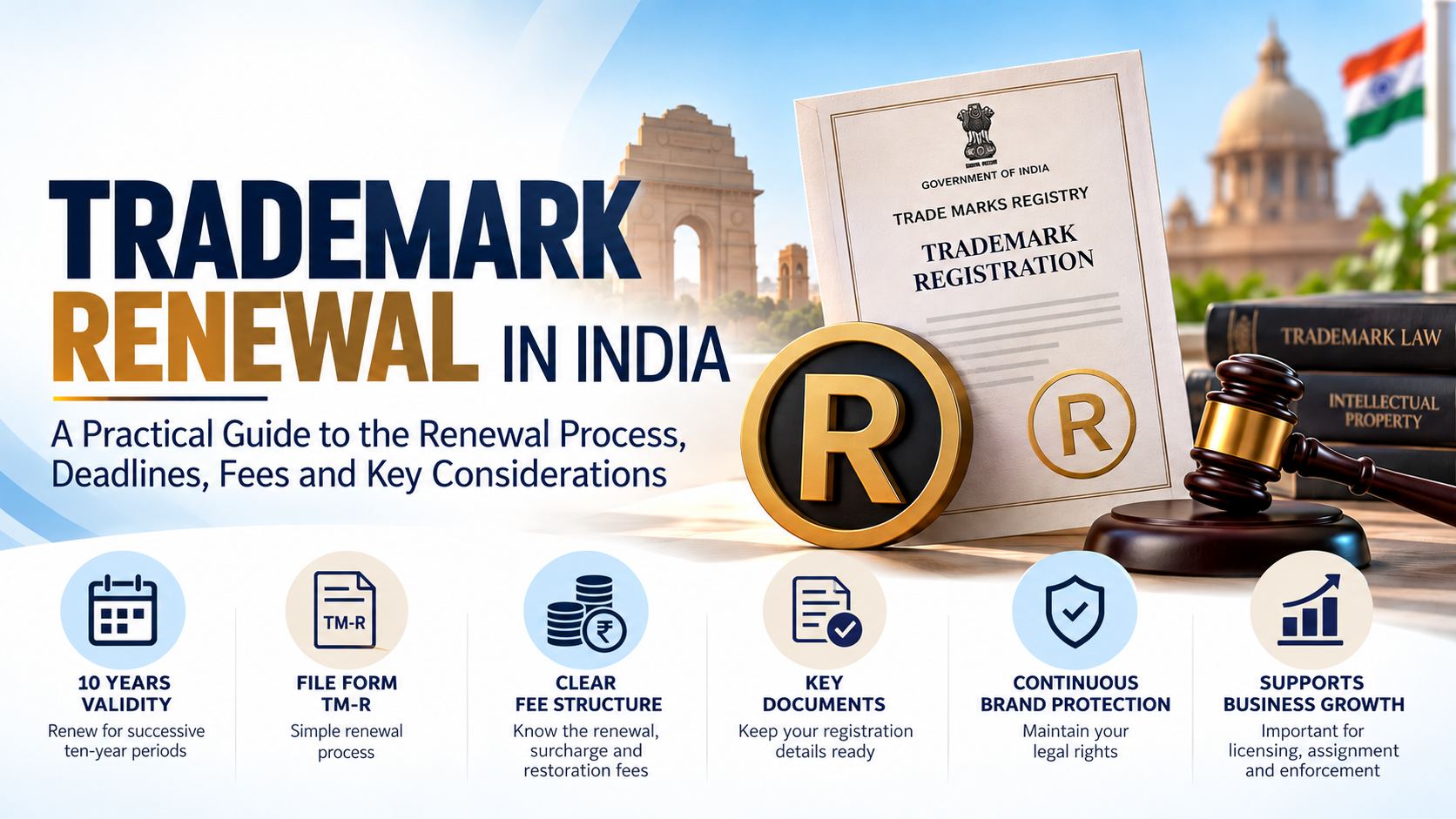
A Practical Guide to the Renewal Process, Deadlines, Fees and Key Considerations
A registered trademark can be an important part of a business’s identity and commercial value. It helps distinguish the goods or services of one undertaking from those of others. Registration, however, should not be treated as a one-time administrative task: the proprietor must keep track of the renewal deadline and comply with the applicable filing requirements to maintain the registration.
1- What Does Trademark Renewal Mean?
Trademark renewal is the procedure for extending the term of an existing registration for another ten years. Section 25 of the Trade Marks Act, 1999 provides for renewal for successive periods of ten years, subject to the prescribed procedure and payment of the applicable fee. Renewal relates to the registered mark and the goods or services covered by the registration; it does not, by itself, expand the registration’s scope.
2- When Should a Trademark Be Renewed?
The renewal window is governed by the Trade Marks Rules, 2017. Under Rule 57, an application in Form TM-R may be filed within the period permitted before the registration expires. As a practical matter, proprietors should begin checking the renewal details well in advance rather than waiting until the deadline is close.
The Registry may issue a notice concerning an approaching expiry in the circumstances provided by the Rules. Nevertheless, the proprietor should maintain an independent deadline system and ensure that the address for service recorded with the Registry is current.
3- Steps in the Trademark Renewal Process
Step 1 — Verify the registration. Check the trademark number, proprietor’s name, relevant class or classes, current status and expiry date against the official IP India records.
Step 2 — Confirm what is being renewed. Review the registered mark and the goods or services covered. Renewal ordinarily extends the existing registration; it is not a mechanism for making substantive changes to the mark or specification.
Step 3 — Prepare the required information. Keep the registration details and filing information ready. If an advocate or trademark agent is filing on the proprietor’s behalf, check whether an authorisation or Power of Attorney is required.
Step 4 — Submit Form TM-R. File the prescribed renewal application through the Trade Marks Registry’s official filing system and select the applicable renewal option.
Step 5 — Pay the applicable fee. Pay the prescribed government fee for each relevant class, along with any surcharge or restoration fee that applies to the filing.
Step 6 — Preserve the filing record. Save the application acknowledgement and payment receipt. Monitor the application and respond promptly to any communication issued by the Registry.
Step 7 — Check the updated record. After processing, verify the renewal status and record the next renewal deadline in the organisation’s compliance calendar.
4- Government Fees for Trademark Renewal
The fee payable depends on the filing method and the stage at which renewal or restoration is sought. The following figures are reproduced from the fee schedule referred to in the source material and should be checked against the latest official IP India schedule before filing.
|
Filing category |
E-filing fee |
Physical filing fee |
|
Renewal before expiry (per class) |
₹9,000 |
₹10,000 |
|
Renewal within six months after expiry (per class) |
₹9,000 + ₹4,500 surcharge |
₹10,000 + ₹5,000 surcharge |
|
Restoration and renewal (per class) |
₹9,000 + ₹9,000 restoration fee |
₹10,000 + ₹10,000 restoration fee |
These amounts are government fees only. Professional charges, if a representative is engaged, are additional and may vary. Fees and filing options can change; confirm the current amount on the official portal before making payment. Different categories of applications or marks may also be subject to specific requirements.
5- Information and Documents to Keep Ready
For a routine renewal, the following information is generally useful:
A fresh trademark search or proof of commercial use is not ordinarily listed as a standard prerequisite for a straightforward renewal. However, issues such as non-use, discrepancies in ownership, pending cancellation proceedings or an existing Registry or court order may require separate attention.
6- Why Timely Renewal Matters
7- What If a Trademark Is Not Renewed?
If the renewal fee is not paid within the applicable period, the Registrar may remove the mark from the Register in accordance with the Act and Rules. Depending on the timing and the status of the mark, the proprietor may have an opportunity to seek renewal with a surcharge or apply for restoration and renewal. Such relief is subject to the applicable legal requirements and should not be assumed to be automatic or available indefinitely.
If a registration has expired or appears to have been removed, the proprietor should promptly obtain the latest Registry status and consider the available options. The effect on enforcement, licensing and ongoing business use will depend on the facts, the registration history and the applicable law.
8- Can Changes Be Made During Renewal?
Renewal is intended to extend the existing registration, not to make material changes to the mark. If the proprietor needs to change the mark, update ownership details or alter the specification of goods or services, a separate application or procedure may be necessary, depending on the change proposed. The proprietor should not assume that filing a renewal application will automatically correct or update other details in the Register.
9- Frequently Asked Questions
A registration generally remains valid for ten years and may be renewed for further ten-year periods, subject to the applicable requirements.
Form TM-R is used for renewal and, where applicable, renewal with surcharge or restoration and renewal under the Trade Marks Rules, 2017.
The fee stated in the source material is ₹9,000 per class for e-filing before expiry. Additional amounts may apply to late renewal or restoration. Check the latest official fee schedule before filing.
A renewal request may be possible within the prescribed post-expiry period on payment of the applicable fee and surcharge. If the mark has been removed, restoration and renewal may be available subject to the Rules and the relevant deadline.
The Rules provide for notice in specified circumstances, but proprietors should track expiry dates independently and keep their address for service updated.
No. Renewal maintains the registration, but it does not prevent every challenge or guarantee success in enforcement proceedings. The facts and other applicable legal requirements remain relevant.
Successive ten-year renewals are permitted, provided the proprietor meets the applicable legal requirements and pays the prescribed fees.
Trademark renewal should be treated as a recurring compliance responsibility. The proprietor should verify the registration details, file Form TM-R within the permitted period, pay the correct fee for each class and retain the filing acknowledgement. Keeping renewal dates in a central compliance calendar—and checking the Registry record after filing—can help reduce the risk of avoidable delays and additional costs.
Disclaimer: This article is intended for general informational purposes and does not constitute legal advice. The applicable procedure, fees and available remedies may depend on the current law, the Registry status of the mark and the facts of the matter. Verify the latest official requirements before filing.